Wednesday, November 16th, 2011
21

What If Scotland Divorced the UK?

"If the Scottish parliament votes to have an independence referendum, that's a vote that we would have to respect and we would have to allow that and enable that to happen." —British Prime Minister David Cameron, June, 2011.

Scotland may leave the United Kingdom. This stark truth has escaped the notice not just of the international community, but of most British people too. They don’t really yet believe that our country could once again be split just north of the wonderfully named border town of Berwick-upon-Tweed.

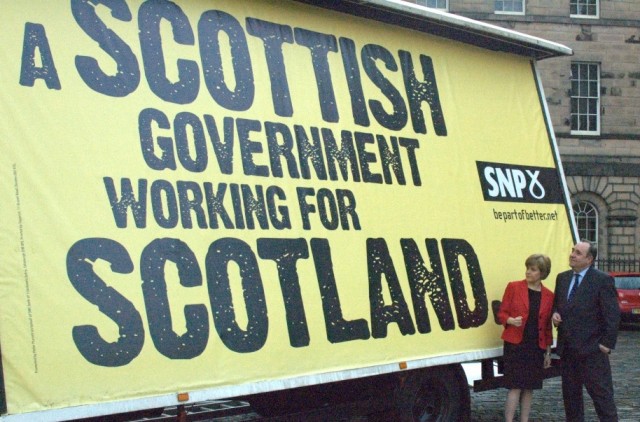
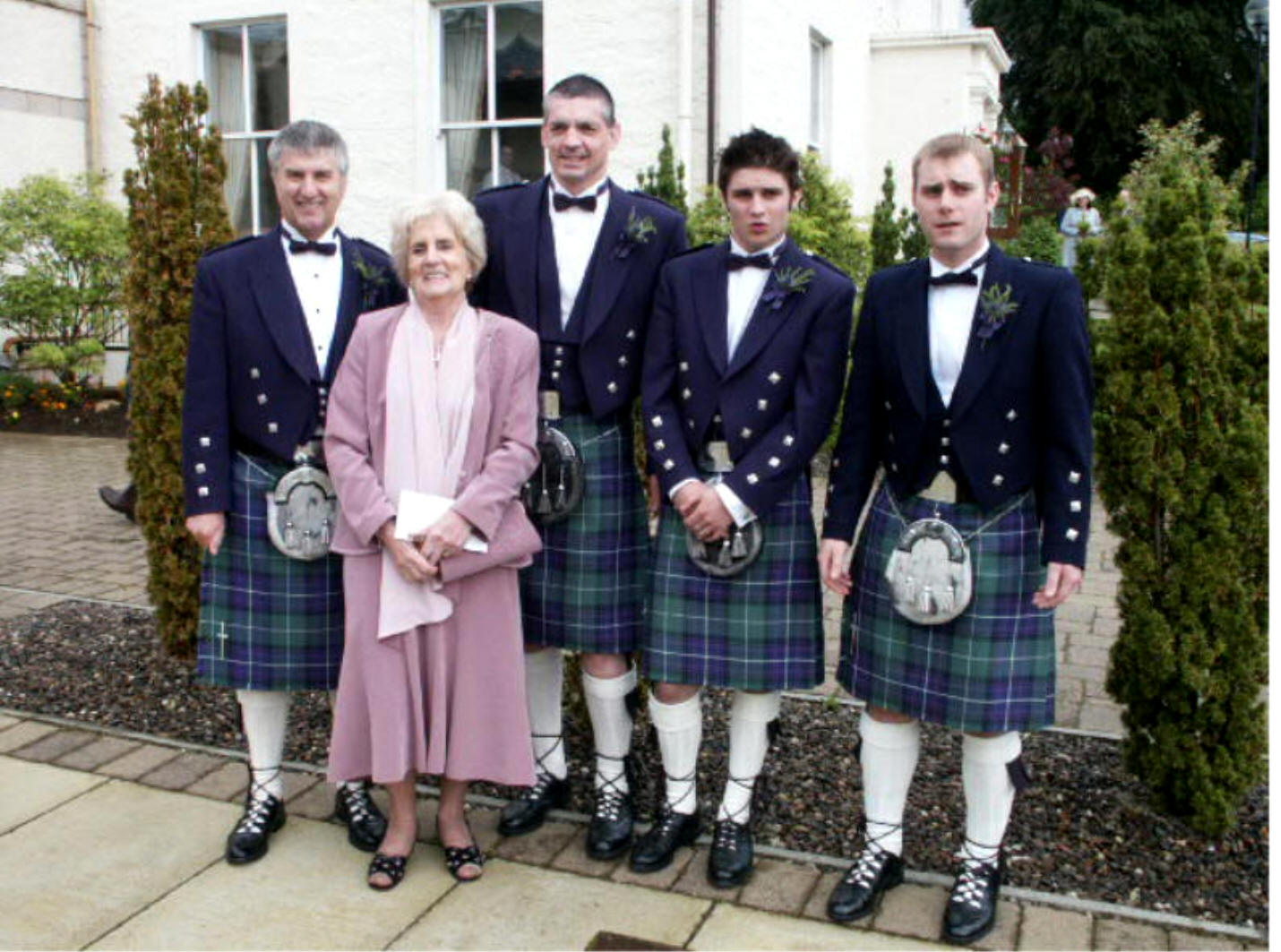
Life north of that border has always been different, with a separate legal system, currency, and, of course, wedding outfits, but the momentum building behind the Scottish National Party (SNP) and its leader Alex Salmond is historic, not symbolic, in its agenda.
300 years have passed since the Act of Union that brought England and Scotland under one crown, one parliament and a single language, but until the SNP won an unexpected victory in 2007, few believed that Mel Gibson’s dream in Braveheart would ever happen for real.

In 1999, the British Labour party passed a law giving Scotland a devolved assembly (like Wales and Northern Ireland), now known as the Scottish Parliament. The Parliament itself was a step into the unknown, and the chances of a small, left-wing party with separatist tendencies must have seemed slim. What the SNP had, however, was the sheer rage of three centuries of waiting driving them on.

When Winnie Ewing opened the Scottish Parliament for first time on May 12, 1999, she invoked the spirit of those centuries. “The Scottish Parliament, adjourned on the March 25 1707, is hereby re-convened,“ she declared.

Eight years sitting patiently in the wings, and four years in power later, the SNP has abolished all tuition fees for Scottish students, all healthcare costs (English people pay a low set fee per prescription), and it plans to create 130,000 green jobs within a decade.

So far, so socialist utopia—but the issue of independence is only now coming to the forefront of the SNP’s strategy as it seeks to consolidate the support of Scots who used to vote primarily for the national Labour or Liberal Democrat parties.

The main problem English people have with Scotland is not a nationalistic one, but a financial one. Each of Scotland’s 5.2 million people receives from the British government in Westminster services in the amount of £1,624 more per year than your average English person. The aforementioned socialist utopia does not come exclusively from Scotland’s own economy, and to add insult to injury, that free tuition commitment doesn’t apply to English students studying at Scottish universities.

For many of the 51 million people in the UK who are English, Scottish nationalism is therefore an attractive proposition to save precious government funding for themselves.

Pro-independence Scots believe exactly the same thing. Their logic is rather that the English are constantly stealing from them in the form of revenue from the shared North Sea oil fields, and that the subsidy argument disguises the true strength of Scottish finances. Note: this is the part of the SNP’s ambitions that could lead to a potential civil war.

Nevertheless, the SNP believe that with oil revenue and their own brand of social democratic separatism, Scotland would be infinitely more successful as a nation state than as England’s less populous, cruelly overlooked neighbor.

The question is: how this will happen.

In the next five years, the 12-year-old Scottish Parliament will almost certainly win more powers away from the British government, but, depending on Scots’ ability to accept a nation with an uncertain economic future, we could also potentially see Scotland replace South Sudan as the world’s newest country.

For the immediate future, that will rest on the question of a referendum, the terms of which are currently being fought out by Edinburgh and London. Only the British Parliament and the UK Supreme Court have the constitutional right to allow or block Scotland leaving the union of England, Northern Ireland, Scotland, and Wales. For it to happen, Parliament would need to pass a law or hold a referendum, potentially allowing everyone in the UK to make that decision (which would almost certainly result in the perpetuation of the status quo).

The Scottish government wants a referendum that would allow Scottish people exclusively to decide if they want to be independent. An added complication is that Alex Salmond, Scotland's fourth First Prime Minister, wants two questions on his version of the sheet of paper: “Yes or No” to complete independence and “More power or complete independence” as a second consideration.

The consolidation of power just short of secession in the second question is termed “devo max” by Mr. Salmond, and is seen as a way of biding time and appropriating more power on policies like tax before trying again on full independence at a later date.

If the SNP lost their referendum outright, it would set back their ambitions considerably, but this is very unlikely. In the most recent poll, 33% of Scots favored giving Scotland more control over tax and benefits while remaining part of the UK, and 28% supported complete independence.

There is a clear majority demanding more power for Scotland, but they are split over quite how much. If the SNP could maximize its power center in Edinburgh, taking more and more responsibility away from the UK government, it just might get the mandate required to call another, later referendum on independence, and this time it could win.

It would need the support of the British government, and would have to avoid a block by the Supreme Court, but the principle of self-determination for Scotland in some form is broadly accepted by all three major British parties.

For Salmond, an independent Scotland is a fantasy sketched out in some detail. He has said that Scotland would unilaterally join the EU, that the Euro would be its currency, and that it would have an army, navy and air force that “would cooperate with our western allies in a range of engagements.”

Salmond likes to recall all the Scotsmen before him who have fought for independence, placing himself in a long line of those wrestling power from the tyrannical English. “In my heart, in my head, I think Scotland will become an independent country within the European community, with a friendly, co-operative relationship with our partners in these islands,” he once said. Don’t underestimate the force of 300 years of dreaming.


Jennifer O'Mahony is a British journalist currently based in Edinburgh, Scotland. She posts as @jaomahony on Twitter.

21 Comments / Post A Comment

metoometoo (#230)

After spending some time in Dublin and in Edinburgh, I couldn't help but notice how independence from England seems to make people markedly happier.

Mr. B (#10,093)

Did anyone see that episode of Highlander where Duncan MacLeod steals the Stone of Scone out of the Tower of London? I loved that episode.

DMcK (#5,027)

'Cause now is a GREAT time to join the EU!

Interesting, the EU aspect. Think of poor Estonia, who just joined in 2010…

jfruh (#713)

@Jennifer O'Mahony@twitter Estonia joined the Euro in 2010; they've been in the EU since 2004. Similarly, since the UK is already part of the EU, Scotland would only have to adopt the euro if it breaks away, admittedly no small thing.

LondonLee (#922)

Given the choice I'd keep the Jocks over the Micks and Taffs but I don't think most English people would even notice or care if any of them left the UK. I'd like to see them try to go it alone, it would be a, you know, hoot.

BadUncle (#153)

A great dream. Two nations united under a single contempt for sobriety and principles of edible cuisine.

@BadUncle Well, I agree on the cuisine part, but rather than a contempt for sobriety I would prefer it to be known as an affection for intoxication. Helps, you know, to swallow the idea of paying millions and millions to support a family of minor german princelings.

jfruh (#713)

Out of curiosity, since there isn't a separate Scottish citizenship, how is that "no free tuition at Scottish universities for non-Scots" thing enforced? I mean, couldn't the family of an enterprising English lad who got accepted to a Scottish university just move to Glasgow the summer before he starts his studies and get the free ride?

It's also worth noting that Scotland has a separate "currency" in a very narrow sense: there are separate Scottish banknotes, issued by Scottish banks, but there are just different bills representing the same underlying British pound. (The coins are the same in both countries.) This will make any theoretical transition to the euro (which under current EU law Scotland would have to make, as only the UK and Denmark have explicit opt-outs) tricky, since presumably they couldn't go just from one to the other? The other eurozone countries went through a transitional phase when their native currencies were locked to the euro, something that the UK pound obviously couldn't do.

Jfruh – to qualify for 'Scottish' status you must have lived in Scotland for 3 years, and be able to prove it. You could also live in any other EU country, prove that, and get free tuition. Only the English have to pay £9000/year in a bizarre loophole.

I take your point on the currency. Until a few years ago you couldn't use it in England though…

There is debate at the moment as to whether an independent Scotland would have to 'reapply' to join the EU, that's before we even discuss the Euro.

jfruh (#713)

@Jennifer O'Mahony@twitter I think I heard that some EU bigwigs were mooting a tweak to the EU treaty that would basically said that if any part of an EU state were to become an independent country, it would automatically be able to get EU membership if it wanted it (on the logic that it already had the full measure of EU law established). But some countries (cough Spain cough) are not high on this idea as it might make it easier for secession-y bits to leave (cough Basques cough). So yeah, at the moment, I think legally Scotland would have to reapply and get all 27 current members to OK it.

@Jennifer O'Mahony@twitter Not quite – you've always been able to use Scottish pounds in England but you might have to argue your point with a shopkeeper or busdriver who thought you were trying to pull a fast one. Scottish 'currency', as jfruh rightly points out, has always been legal tender in the UK as it's only the pound with a different paint job.

marrog (#181,520)

@Jennifer O'Mahony@twitter

As an employee at Edinburgh University let me clear this one up: it's not a 'bizarre loophole'; it's the result of Westminster funding being pulled from Scottish universities that was formerly subsidising English students. The other option would have been for the Scottish government to start paying the way of English academic refugees whose own government refused to pay for them – seems a little unsustainable. It would be lovely if they could afford to do that, but they can't, so while they continue to fund their domestic students, they've had to raise fees for the English students – in line with the costs of the better English universities – and Edinburgh Uni is well in-line with those schools in terms of quality of education.

Scottish universities were hit by funding cuts from Westminster, just like the rest of the UK, and as such had to raise fees accordingly for non-subsidised students – they continue to receive subsidies, of course, for their Scottish students, so the Scottish students continue to have their fees paid by the Awards Agency. Which by the way is another minor inaccuracy in your article – Scottish students haven't had their fees 'abolished'; they have their fees paid for them by the government. I'll add that this system wasn't put in place by the SNP, either. My fees were paid for me when I went to uni in 2000 under (IIRC) a Lib/Lab coalition.

The Scottish Parliament made the choice and has continued to make the choice to preserve funding for Scottish students' university education, because they consider it to be every Scot's duty to pay for the education of those who want it, that they can then use that education to work toward the future good of the country. The people of Scotland have shown with their voting practices that they are in full support of this ideal. The question should not be why Scotland continues to prioritise the education of their children so highly, but why England seems to care so little about theirs.

The question of how much money is coming in or going out of Scotland is a thorny one, and I've yet to see anyone provide conclusive proof that Scotland costs more than it contributes – I've seen a huge variety of figures depending on what's included (North Sea oil (which I agree would be ridiculous to assume would go to Scotland), the financial sector, tourism, tax revenue) – all-in-all the figures tend to suggest that Scotland pays for itself, putting more back into the UK economy overall than it takes out. Of _course_ the overall cost per person is higher – that's a natural result of being a sparsly populated country by comparison to England – if you chose an area of England with a similar population density and size and compared that side-by-side with Scotland, I think the picture would be rather different. In any event it's pretty hard to say what Scotland does or doesn't cost but it _is_ worth observing that Scotland's parliament has a fixed budget, and they seem to stick to it just fine (despite wasting stupid amounts of money on white elephants like the Edinburgh trams).

At the end of the day, the longer the tories stay in power down south, the stronger the argument for Scottish independence – or at least devo max – becomes. I would personally love to see the UK remain united – I think that sepratism is a counter-productive sentiment in these 'global' times. But I still voted SNP in the last election because at the end of the day the SNP's #1 priority right now is to make Scotland look as self-governable as possible – and that means no bitching, no in-fighting, no rampant partisanism and none of the counter-productive blame-gaming crap that's happening south of the border.

The SNP are motivated to reflect not their own agendas but the most moderate path they can to attempt to curry favour with those first time SNP voters who, right now, half want to see what they do next and half just wanted to give the other three parties a good hard kicking. We are not separatists. But we could be. They have another three years to talk us round. And the way things are going in England, they might just do it.

And yes, completely right on Estonia and the Euro. NOT the same thing, obviously.

Mr. B (#10,093)

Oddly, the EU seems partially to blame for this nonsense. The blurring of boundaries and national identities have been coupled with a rise in regional sentiment, with independence movements in places like Scotland, Catalonia and Flanders/Wallonia being some of the more well-known. Scotland seems the most likely to succeed, and if it does it could well start a chain reaction of balkanization across western Europe. Even as the notion of the nation-state becomes more and more meaningless in a unified European economy.

eatbigsea (#1,361)

As a Canadian who has lived in the UK for the past ten years, I really hope it will not amount to anything. The Scots are not very far along in the process compared to Quebec, but the pain that would ensue even from just a referendum is not to be sneezed at.

All I can say is, good luck determining the wording of the referendum questions.

So, were this to happen would Scotland be a Monarchy or a Republic? There is, in Francis II, a Jacobite pretender.

RolftheGanger (#180,247)

Interested readers might like to trace the history of how the ordinary people never accepted the 1707 sell out by some indebted and bribed parliamentarians (sound familiar?)

The Union treaty was signed in a cellar in Edinburgh , to escape the enraged mob. Within seven years one of the principal signatories was moving a bill to reverse the Union. There have been 12 bills to cancel the Union over the centuries, one came within two votes of success. The 1913 Liberal Home Rule For Scotland Bill would have succeeded, had that idiot Kaiser Wilhelm not launched WWI. In the 1930's the London government had to put tanks and troops into Glasgow because the Scottish Nationalists and socialists were feared to be on the point of secession. The Labour Party was started in Scotland – the leaders wanted a Scottish Government with full control in Scotland. Another sell out. Even immediately after WWII, in the late 1940's two million people signed a door to door petition demanding a Scottish Parliament. This was the Scottish Covenant. Carefully removed from history, it was denied by a Labour Government.

That must tell you that the demand for a return to self government in Scotland is a lasting wish of the people of Scotland. Long denied their wish, but now virtually certain to happen in 2014/2015.

The "UK" has always been a sham. Scotland, Ireland, Wales, and many places in England removed from London and "the South" are only united when there's some other country warring against Britain. Otherwise, there is no "United" to what once was a "Kingdom". Oh, sure there's Canada's and Australia's dubious "loyalty" to the "UK" but that's nostalgia, not political solidarity. Each nation would be better off politically and economically on their own without the bludgeoning effect of ineffective "Parliament" or "the Crown" interference.

The scots had no problems when their MP's were voting and seriously influencing matters at Westminster. Then they were part of the United Kingdom and were 'entitled' to participate. they were influencing issues that did not and never would affect them. David Cameron is their Prime Minister and will be until the referendum has taken place and the Scots decide to leave the United Kindom .. Or not
Alice from Britain Loans

Post a Comment