
No Matter What, America Hearts Paris
No Matter What, America Hearts Paris
by Emma Garman
Now that the party’s over for the monsieurs of France’s Parliament, as hushed-up pedophilia, routine sexual assault and general misogyny are suddenly no longer federally protected perks of the job, a vital question emerges: Will the exposure of all this Gallic turpitude make the merest difference to American society’s perpetually raging, and mostly unrequited, crush on Paris? All signs point to non.
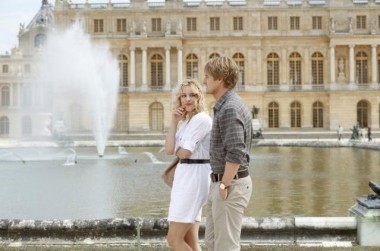
Exhibit A: So far, the box office figures for Woody Allen’s shamelessly adoring paean to the City of Lights, Midnight in Paris, look set to make the movie Allen’s most successful yet, and critics are talking about a Best Picture Oscar nomination. Who cares that Midnight in Paris is frothier than air, a collection of clichés and worn-out ideas which only becomes slightly more than the sum of its parts, when it makes such sweet cinematic love to the French capital’s narrow winding streets, its hallowed landmarks, its sun-dappled bridges and charming markets?
Allen’s hero, Gil Pender (Owen Wilson), is a Hollywood screenwriter vacationing in Paris with his shrewish fiancée and her materialistic Republican parents. His avowed dream is to chuck in his philistine Los Angeles existence and live in Paris permanently, “walking along the Left Bank” and “writing novels at the Café de Flore.” Admittedly, the movie is all about nostalgia — Gil manages to slip back via time-travel to his romantic ideal of Paris, the 1920s, where Hemingway, Fitzgerald et al welcome him. Still, while it’s unclear whether Allen is mocking or celebrating Gil’s spectacularly generic fantasy of Parisian life, the final scenes imply the latter. (Although it doesn’t help that regardless of the role he’s playing, Wilson is congenitally incapable of speaking in a sincere tone of voice.)
Either way, it’s precisely this trapped-in-amber image of romantic, bohemian Paris for which Americans have such a collective boner, willfully oblivious to the tawdry reality that the Flore is now solely populated by middle-aged tourists drinking $10 coffees, and that the nexus of creativity and avant-garde moved to edgier Right Bank neighborhoods decades ago — or, even more accurately, to other more vibrant and progressive cities.
Yet the same old tropes persist, not least because authors who write about Paris are seldom inclined, or permitted, to diverge from the accepted script, which goes something like this: Paris equals the three neighborhoods on the Left Bank that contain Saint-Germain-des-Prés, the Latin Quarter, and the Eiffel Tower. Within this nirvana — held in suspended animation ever since Sartre decided that man is condemned to be free — artistic endeavor is prized, hard work is disdained, cigarettes don’t give you cancer, booze doesn’t rot your liver and women don’t get fat. No, not even after consuming beaucoup de chocolat to distract themselves from their husbands’ constitutionally enshrined philandering.
Travel writer Elisabeth Eaves, whose fabulously addictive new memoir, Wanderlust: A Love Affair with Five Continents, recalls her adventures in many different countries, ended up in Paris when her then-boyfriend was assigned his first diplomatic posting. As her book describes, the couple moves into a lavish government-provided apartment on the Avenue Montaigne, a street replete with flower-decked balconies, a branch of Chanel, and regular Karl Lagerfeld sightings, like some “absurd American fantasy of Paris come to life.” Eaves does her best to enjoy her Paris sojourn but eventually she succinctly sums up, the first time any writer has done so, exactly what I so disliked during my own time living there: “the dullness of the city, the Sunday closures, the insufferable correctness.”
Eaves’ authentic depiction notwithstanding, the most cursory survey of innumerable recent books set in Paris, inspired by Parisians, illustrated by photos of them, drawing on their potent sexual juju, revealing their never-before-revealed, foolproof and delicious diet secrets, exploiting their timeless wisdom, worshipping their devastating chic or some mélange of the above, proves that the trifling issue of reality is of zero importance to publishers. And who can blame them when, in a tough market, there’s a subject other than teen vampires and Swedish sex crimes that’s almost guaranteed to sell: Gay Paree!
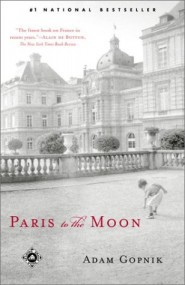
The best part? Every section of the reading public can be targeted. The NPR-listening, New Yorker reader who wouldn’t be seen dead with a copy of French Women Don’t Sleep Alone will proudly read French sabbatical-porn like Adam Gopnik’s Paris to the Moon, or John Baxter’s latest The Most Beautiful Walk in the World: A Pedestrian In Paris (which, writes LA Times’ Susan Salter Reynolds, is “as close as a reader can get to the feel of a languid spring walk along Baron Haussmann’s boulevards without actually being there.” She obviously means, but is too polite to say, that all that’s missing from the experience is sidestepping dog shit). For serious foodies, or aspiring ones, there’s The Sweet Life in Paris: Delicious Adventures in the World’s Most Glorious — and Perplexing — City, a “memoir with recipes” by pastry chef David Lebovitz. (Yes, sorry if I’m the first one to break it to you, but “memoir with recipes” is officially A Thing.) Book clubs with ambitions a modicum beyond the new Anita Shreve are no doubt reading The Paris Wife, a novel from the point of view of Hemingway’s first wife that was originally named The Great Good Place, before being acquired by Random House for over half a million dollars and judiciously re-titled. And so it goes without saying that this summer, as long as your vacation reading requirements somehow involve berets, vin rouge, and rolled Rs, you’re covered with new titles a-plenty.

La Seduction: How the French Play the Game of Life, by New York Times Paris Bureau Chief Elaine Sciolino, promises to explain “how crucial the game of seduction is to understanding France, identifying seduction as a key ideology that shapes how the French conduct business, politics and relationships.” I’ll say! For those who prefer their Paris-teachings a touch more ironic, next month sees the publication of Olivier Magny’s Stuff Parisians Like: Discovering the Quoi in the Je Ne Sais Quoi, pitched as “a tongue in cheek homage to Parisians.” Naturally, Magny, a sommelier and the founder of a company that offers wine-tasting trips and classes, maintains a blog of the same name. Out just in time for beach season is Marie Claire beauty editor Lisa Spellman’s The Parisian Prescription: Getting Svelte the French Girl’s Way. Finally, in Left Bank Logic: How French-Style Rebellion Can Halt the Rise of the Superrich, Jordan Rowntree, an economic historian and founder of D.C. think tank Global Policy Solutions, “traces a line from 18th Century revolutionaries to the 1968 Sorbonne uprising to contemporary rioters in Bastille Square, showing how France’s unique brand of militancy can be replicated to smash world poverty and bring down the new plutocratic class.”
Okay, confession: only two of the four books in the previous paragraph are real, but can you tell which ones? I thought not. Thus, if French Finance Minister Christine Lagarde, the favorite to become the new IMF head, doesn’t get the job — and I hope she does — she should know that Secrets of a Paris Politicienne: How I Prospered in a Disgustingly Sexist World, and You Can Too will be snapped up for seven figures, en un éclair.
Briefly a reluctant Parisienne, Emma Garman now lives in New York, where she’s a writer.