
The Enigmatic Performative Internet Art Of Lil B
by Julian Hattem
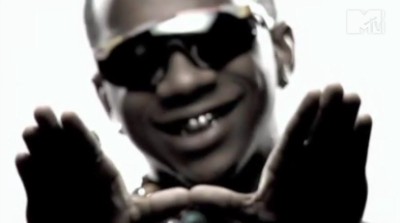
Twenty-one-year-old Bay Area native Brandon McCartney is a rapper of an odd sort. For the better part of five years, since he was in high school, he’s been rapping under the moniker Lil B. First he performed with three other high schoolers in the hip hop group the Pack, but he is now probably best known on his own, as a darling of music bloggers and readers of the Fader.
In addition to Lil B, he also calls himself the Based God because he plays Based music — a style he invented and which he is alone in performing. He’s biggest on the internet, where his presence is unparalleled; he has created more than 100 Myspace accounts in his name, each with a half-dozen unique songs and freestyles (here’s a sampling). On an average day, he updates his Twitter account a dozen times an hour. He is also, perhaps, primarily responsible for the entrance of “swag” into the vernacular of teenagers across the country. Instead of Air Maxes or the latest Yohji Yamamoto, he’s notorious for wearing dirty, years-old Vans that seem more suited to his skateboarding Bay Area neighbors.
He’s never had a real hit single, much less anything that reached the Billboard charts. His albums are released on tiny, no-name labels and last year he released an ambient and spoken word record called Rain In England, praised by British avant garde music magazine Wire for its “sheer weirdness.” The notion of albums seems obsolete for him, though; Lil B’s music exists best as clips on YouTube and Myspace, where the content goes on forever. (He’s not unique in this, of course. Before Lil’ Wayne was a mega-star he, too, existed best in the realm of mixtapes and featured appearances, pumping out new songs on a daily basis. But then he got famous, and now he doesn’t really do that any more, unfortunately.) Oh, and Lil B also has a self-help book, Takin’ Over by Imposing the Positive, in which he extols the values of positive thought, encouragement and support. But he’s also on the cover of magazines and recently sold out out New York’s Highline Ballroom.
All of this, taken together, makes Lil B a weird celebrity. He’s weird because he’s not quite famous off the internet. But also because his music isn’t really good, in many conventional interpretations of the word. It’s challenging, though, in that it sometimes seems too simplistic to be listenable. What has generated most of his internet fame is a series of hundreds of Based Freestyles where he delivers mumbled half-rhymes over his own homemade beats. Each of them and the dozens of homemade “music videos” would be forgettable on their own, if they weren’t part of a larger body of work with hundreds of other freestyles and songs, Myspace pages and all-out social media domination. Like pointillism, the true breadth of Lil B’s creation can only be understood when you take a few steps back and put everything he’s done into perspective.
*****
The first time I played for a friend the opening tracks of T.I.’s Trap Muzik he called it psychedelia, and it’s a fitting description. Trap Muzik, like Lil B, is as disorienting as anything Amon Duul II ever did. Lil B is all about the estrangement of language, largely because his rapping isn’t really “good,” per se. It’s more of a stream of consciousness that kind of rhymes, sometimes, often with simple hooks repeated over and over and over. And the word “swag,” which he yells nonstop in every song.
Let’s take a look at “Wonton Soup,” a song about getting and eating wonton soup. I think. Kind of. Actually, like most of Lil B’s songs, it’s not really about anything. It sounds like if a 12-year-old told you the story of getting wonton soup, which would go something like, “So, I parked my car, I got wonton soup, I fucked your girlfriend, and then I ate the wonton soup.” Except it doesn’t sound stupid, surprisingly.
Or does it? Maybe it does sound stupid. Maybe Lil B just has a whole cohort of music bloggers confused.
But I don’t think so. By abandoning narrative, traditional verse structure and the major recognizable trappings of hip-hop (and pop music writ large, really), he isn’t making psych, nor rap, nor even techno, as his beats have been described. Like Kanye West but, perhaps with the freedom of being not-famous, Lil B is proving that outmoded concepts of genre and celebrity are, well, outmoded. Watch the “short film” “Am I Even A Rapper Anymore?” and, like, think about it. What is going on here? I don’t even know. Do you know? Can you help me out?
Bizarrely, that’s one of the most persistent tropes to describe Lil B: that no one really understands what’s going on half the time. It’s as if everyone is looking at this phenomenon, aware that it’s meaningful and worthwhile for some reason, but not sure why. “A lot of people don’t really understand and I’m not sure that we do either,” says Vice’s Ryan Duffy. Which, for a person being paid money to cover Lil B as a journalist and critic, is a weird statement. But only in the music world can an artist like Lil B exist, because in that press the oddities that we can’t understand are more valuable that the ones we’ve seen before. In conceptual art, where Lil B is actually maybe better suited, everyone would have an idea of what was going on with him, and then all the fun would be gone.
Or listen to this song, “I’m Miley Cyrus,” one of a, um, series of songs, each of which references the others, in which Lil B says that he is a different celebrity. The majority of the lyrics to this song are, appropriately, “I’m Miley Cyrus/ Swag” repeated ad infinitum.
The similarities between this track and any of Warhol’s works on the reproducibility of celebrity are pretty easy to spot. It’s about forming meanings from an over-abundance of stimuli. It’s about reducing the syllables of the names of famous people into nonsense words, and divorcing words from their meanings altogether, which is what happens when you say “Miley Cyrus” or “Ellen Degeneres” over and over for four minutes straight. (Do it, say those words over and over again right now. They’re weird words, right? “Miley”? What is that?)
It could be a project by a student at Bard if it weren’t made by a kid in the Bay who joined a rap group when he was in high school.
Or maybe it is the same thing. As characters like Andrew W.K., James Franco and Kanye West push against traditional notions of “celebrity,” “performance” and “art,” Lil B is building a career off of breaking a new artistic mold, instead of building a career and then, later, using his fame to do something new. Only an outsider rapper, in other words, can tell us to fuck it all, because all our shit is dumb and played out. But also that “you are a shining star,” as he does on “We Are The World” and in his book.
As workers in a capitalist system become alienated from the products of their labor, maybe Lil B shows us that artists and audiences in the supermodern world become alienated from artwork, even when it’s a not-tongue-in-cheek self-help book. Lil B’s style is somewhat of a regression of form, in that lyricism is presented as a byproduct of production, even in the over-cheesy video above. He makes a song, one of literally thousands of others, puts it on the internet and then it’s done. Just like that, he has created an artwork, quickly and easily, no more difficult than signing onto Twitter for an afternoon. It is not his, just as it is not ours. The songs becomes YouTube’s and Myspace’s, where they will live out the rest of their digital life. Surely Lil B has already forgotten hundreds of them.
Because with Lil B, it’s the method that matters. The medium is so much more than the message, because the message, often, is that there is no message. No one needs some arcane mystery about who the “real” Andrew W.K. is. We just need a rapper to yell that he is someone else, that he is cool no matter who he is and that he is, now and forever, fucking your bitch. For him, the primary element of rap music — lyricism — is superseded by form, to the point where the lyrics don’t matter as long as the object — the song — is birthed. And the songs are only valuable because of the pure fact that they exist as part of a larger whole, that they are ones of thousands of other tracks out there. Lil B’s songs serve mainly as a testament to the creative powers of Lil B, just as the Myspace pages and endless tweeting do. In that process of creation wherein he makes those thousands of songs and forms for himself a new life on the internet, Lil B himself becomes the art piece.
Or maybe it’s all a joke. I don’t know. I don’t get it, really. But he had an album that came out last week called Angels Exodus. And another one, Glass Face, is coming out soon. Probably a million other mixtapes and videos came out in the time it took you to read this.
Julian Hattem lives in Washington, D.C. and writes about pop music and politics. He has a twitter and a blog that you can read.