
Wednesday, November 3rd, 2010
69

Writer Takes Stand Against the Writing of Books
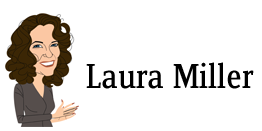
Laura Miller takes issue with National Novel Writing Month: her concern is that this is a symptom of the Culture of Narcissism™ and that it means none of these would-be writers reads, or at least, none of them will have time to read throughout the month of November. (Her argument is actually fairly complex, so it's worth reading for yourself; it's also vigorously rebutted elsewhere.) Apparently the world is plenty full of people who write but do not read? This has not been my experience but I have not met everyone, so I won't judge. She has further complaints: "I am not the first person to point out that 'writing a lot of crap' doesn't sound like a particularly fruitful way to spend an entire month, even if it is November." Oh, is it now. (Look, this is me, avoiding a stupid and obvious joke!) But seriously, how about a whole year of crap, cuz lemme tell you about that. Anyway: yeah, we probably should be rewarding book readers in some way! When I was a kid, the youngster who checked out the most books in a month got a little award. Hmm. Though I guess I don't really check out books from the library any more? But I sure do have a craving for awards. Maybe the Culture of Narcissism™ got me too.

69 Comments / Post A Comment

The fascinating thing about Laura Miller? Her head is actually that poorly proportioned to the rest of her body in real life.

BadUncle (#153)

You know who also has a giant bobble head? The woman who does the traffic report on New York 1.

What is it with these website people and their big heads?

laurel (#4,035)

They're failed actors?

MaryHaines (#3,666)

BadUncle: in her case I think it's more that she has a very tiny body. But the effect is the same: cartoon caricature drawn by some guy on Central Park South.

BadUncle (#153)

MaryHaines: yeah, she does look pocket-sized.

HiredGoons (#603)

I'm protesting with 30days of Mad Libs.

Moff (#28)

I think her post makes some sense, inasmuch as most people who really want to write books and who have the drive to do it, will do it regardless of whether there's a movement they can sign up for.

Also, I just had to review a couple books for a small magazine, and inadvertently selected a self-published novel as one of them. A heartbreaking work of staggering genius IT WAS NOT. So I may be biased!

HiredGoons (#603)

the only persons who can get away with self-publishing are Gutenberg and Crispin Glover.

Moff (#28)

And, I mean, the rebuttal? "Good creative energy is never, EVER misplaced"? But actually, it probably is.

I mean, I think the overall argument Miller is making — although certainly not without its flaws — is that there is something narcissistic about the idea that I'm writing a NOVEL! And that's a CREATIVE PURSUIT! And it doesn't MATTER whether it's any GOOD — it's just a GOOD THING TO DO IN AND OF ITSELF! At least for ME, I mean.

There's no bright line to be drawn here; there's no way to gauge whether this person's artistic pursuits are more valuable than that person's — or even necessarily what "valuable" means. But maybe we could draw a subtle but real connection between the self-esteem movement and "American exceptionalism" and the present prevalent political mindset that the Average Citizen Knows Best and this institutionalizing of what has historically and fairly successfully been a relatively solitary endeavor, on the grounds that gosh, however you direct your creative energies, the important thing is just that you're directing them. (And doing it with friends!)

I mean, maybe?

Assuming the author actually prints it out, and assuming they don't instruct the executor of their estate to burn the manuscript, maybe there's more value than you think?

Not saying anyone's going to unearth a hidden masterpiece, but for children and grandchildren it likely has value.

And It's still some kind of accomplishment, even if you should rightly cringe upon reading the first sentence.

Moff (#28)

Sure, sure. I'm not saying there's no value to the final product (although my guess is that manuscripts recovered by children and grandchildren are likely to cause the readers more pain and weariness than offer pleasurable insight into their ancestors' inner life).

But number one, NaNoWriMo doesn't need to be part of the equation for someone to sit down and write something. People have been doing that for years!
Number two (pun coming), it is some kind of accomplishment, but so is your kid's first bowel movement. So was Christine O'Donnell's Senate bid! I mean "some kind of accomplishment" is about as faint as praise gets. What I think Laura Miller is getting at is that there's a bit of a sacred aura around NaNoWriMo participation — "Oh! I'm making art! Even if it's not any good — well, that's part of the process, and it's still valuable!" But to whom? Pretty much just yourself. And if, as I think we can reasonably surmise, most participants are not thinking real hard about structure and characterization and craft, even that value is pretty minimal.

So, not that we can't do things that are of minimal value (and not that they never produce something of greater value), but the halo around these things — maybe it's indicative of something we ought to notice about our culture? Like, that despite all the problems we complain about, problems that ostensibly could be solved with a few more person-hours of work every day, there's this sanctification of what boils down to a process that yields little to nothing but some personal satisfaction and rarely leads to anything more?

(Not to mention, there are totally people who write books but don't read them. And if you really respect books, reading a shitload of them probably is a better way to demonstrate that than trying to write one?)

Mar (#2,357)

I don't get why it's necessary to police the creative activities of others. I don't see how casual gardeners and teenage pianists and watercolor grandmas and hipster Etsy bitches and write-a-thon novelists are somehow RUINING THE ARTS WITH THEIR PROFANE BAD ART PENISES, which is essentially the argument that you and Miller are making. The value of doing all that writing is that it will make you a better writer and reader.

I mean, it seems as if you are afraid that NanWriMo will result in too many people thinking they are awesome novelists, with the result that the world will be full of terrible novels, and nobody will read Bellow anymore. But!

1.) That's already happened and
2.) Don't you think the realities of the publishing industry will disabuse these novelists brutally of any hubris they may have managed to acquire?

The only way anybody can get better at something is by actually practicing that skill. Are you offended by little kids practicing their scales? Do you yell at them that they're obviously no Beethovens, so they don't really have the right to learn "The Old Grey Mare"?

Moff (#28)

Is anyone policing anything? Did Laura Miller suggest banning anyone from writing novels? Did I? I'm pretty sure the main suggestion is just that maybe it's largely a waste of time. If that suggestion is so earthshakingly appalling that you immediately equate to a policing of other people's activities — well, then I think that's evidence for my argument that this sort of thing has become sacrosanct in a lot of people's minds? (I mean, there's a pretty qualitative difference between "offering food for thought" or "criticizing" and "hoping to ban.")

I'm not at all afraid NaNoWriMo will result in too many people thinking they are awesome novelists. I don't care how many people think they're awesome novelists! Nor am I really worried about literature being overrun with a surplus of total crap.

I'm saying, for one, that you can get better at practicing a skill without an annual monthly event. (I'm sorry, but THERE IS ABUNDANT EVIDENCE OF THIS.) And for two, the supposed sacredness with which we treat the Creative Process, as evidenced by the prevailing attitude surround NaNoWriMo, is maybe more indicative of how we feel about ourselves than any serious respect for or thoughtfulness about the process itself.

Moff (#28)

And also likely indicative of what is important to us as a culture. Not to say you can't have both, because you totally could, but what does it mean that we accept National Novel Writing Month as more or less an inarguably absolute good and yet I have never heard of a National Go Work at a Nonprofit Charity Every Day Month or National Read and Blog About All the Bills Your State Legislature Is Voting On Month? Or even just National Write a Thoughtful But Outraged Letter to a Person in Power Every Day Month? These are questions worth asking; they're questions we have to ask if we want to figure out how our society runs.

Mar (#2,357)

How about National Make a Straw Man Argument Month? What I question is the value of critiquing an activity that is, at its worst, harmless. By making these critiques, you and Miller are positioning yourselves as cultural guardians. Of course people can hone their skills without special events or support groups, but if some people choose to utilize such tools, how is this negative?

The creative process is essentially boring. Neither the romantic narrative of the Great Man Struggling to Give Birth to the Great Work nor the post-Boomer Meryl Streep story of the Thoughtful Lady Artist Cheerily Brewing up Quality Fiction/Art/Food in her terra cotta kitchen with a classical music soundtrack are valid. If people want to experiment with different models, who are we to tell them not to?

And come on, there are all sorts of political awareness days and non-profit activity events, to the point of excess. When it's not Plant a Tree Day it's Hug a Suffragette Day.

Polly Peachum (#8,145)

Many folks are more self-deluded than you might think. To use an analogy from another field, I read blogs featuring simple, often badly fitting and executed garments by home sewers. Doesn\\\'t keep them from referring to their work as \\\"Haute Couture.\\\"
Only in America do people think that taking a couple of weekend courses puts you on a footing with people who have studied a craft for decades.
When amateurs without skill, experience and true appreciation of a field work in it, they do devalue the field, to the consternation of professionals who may be struggling to make a living.
And it\\\'s obvious that they\\\'re delusional; otherwise, they wouldn\\\'t post the crap they do. There\\\'s often a little cover excuse about learning from their mistakes.

Mar (#2,357)

The difference between amateurs and professionals is that professionals get paid. Because they are offering a product that is good enough for other people to want to exchange money for it. No amount of self-delusion will prevent the market from disabusing you of it.

Tulletilsynet (#333)

Don't overlook the danger that a completed novel may be published and you may find yourself reading it.

NinetyNine (#98)

Moff: Dudes in a Room are here to serve you! Last month was Cancer Awareness Month, and we totally solved that! What do you need?

Moff (#28)

This is not a straw man argument. It's a little nuanced, though, and I get the sense you want someone to be outraged with, and I don't think it will satisfy you in that regard. I'm just saying: What is it about novels, and what it is about writing them, and what is it about us as a culture, that leads us to conclude decisively that writing them is unquestionably a valuable way for people to spend their time? Why is it an implicit assumption that participation in NaNoWriMo is laudable, when it overwhelmingly yields reams (or megabytes, anyway) of frequently unreadable copy that will be promptly abandoned on Dec. 1 and will rarely engender any serious further thought about the craft of fiction writing?
Why is it that when someone directs their energies toward NaNoWriMo, the general response seems to be that it's really, indisputably admirable? Is it because it's inherently valuable? And if so, how, and in which ways? Or is it largely because it's part and parcel of a cultural mind-set that says The most important thing you can do is say something? Because if it is — well, is that the most important thing you can do?

I think it's very reasonable — important, even! — to ask that sort of thing, not because I think we should be regulating how other people spend their time, but because it might help us figure out how we spend our own time. Culture has its own inertia, and we barely notice it: "Of course I should be watching Mad Men! Of course I need to read Freedom! Of course participation in the mass production of 50,000-plus-word text narratives is a good thing!" But I mean: Why? It's fair to ask. As you say, there are a shitload of other awareness events, many for causes that could materially benefit a lot more people than NaNoWriMo ever might. And yet, the vast bulk of them do not incite anywhere near the interest or involvement it does. And certainly, not that they have to, but the ordering of priorities probably didn't arise through simple coincidence.

A.R. Chrisman (#2,964)

@Hired Goons (wayyy up there): Johannes or Steve?

Mar (#2,357)

I'm not that outraged, and the nuance isn't going over my head. I think your larger points about the culture of narcissism and entitlement are valid.

What I question is: how do you know that NaNoWriMo will "overwhelmingly yield reams of frequently unreadable copy . . . [that] will rarely engender any serious further thought about the craft of fiction writing"? This premise seems unlikely to me. It seems more likely that the production of thousands of words over many hours would cause one to think fairly seriously about writing.

And I suppose I think there might be something inherently valuable in trying to express oneself in writing. I think that the act of writing encourages self-awareness and self-criticism–qualities which can be hard to find in current American culture.

Just because these novels are written doesn't mean they need to be read. The bigger problem with a culture of narcissism is not the focus on self-expression; it's the focus on being heard. It's the idea that everybody's thoughts are interesting enough to be tweeted; that everybody's actions are interesting enough to be filmed.

I suppose I'm going off anecdotal evidence as well. I spent three months once writing a terrible three-act play, and it was one of the most useful things I have ever done. Not because there was any salvageable material in it, but because it gave me a lot of technical insights. It also enhanced my appreciation of well-written theater, television, and film. What ultimate value does that have? Well, certainly I gained personally from it, but on a material level, it's also motivated me to spend money on quality artistic products, which benefits society in the sense that on a very tiny level, I'm contributing to funding what we'll have to (simplistically) call Good Art. We can agree that the propagation of Good Art with Good Ideas is important, right? (Maybe not!)

And come on, NaNoWriMo only gets a couple hundred thousand participants. I doubt it's taking that much away from causes like [Blank] Cancer Awareness or DV or whatever. And, if we statistically analyzed NaNoWriMo participants, they'd probably turn out to be a bunch of Sierra Club pinkos anyway.

Moff (#28)

Oh, I would agree with most of that. And I don't actually have a bone to pick with anyone who does NaNoWriMo. I did it once! And my criticisms here could be 100 percent full of shit (it's not like I'm quoting a lot of hard evidence), and even if they aren't, they don't invalidate the worthwhile elements of the experience. I do think it's worthwhile for people just to create things; I don't think the creation has to have aesthetic, utilitarian, or commercial value to have been worth it. I'm just curious about what's at the root of this specific desire to create in this particular form, and I think it's interesting that there is this sacred cultural space around the act of amateur creation, at least in this area, now. There hasn't always been, by any means.

I don't believe most writers, NaNoWriMo participants or otherwise, don't care about not being read. Wow, a triple negative. That is: I think most writers want to be read, whether they admit it or not. (A few really don't care, I'm sure.) And I think anyone who has spent much time with a slush pile, or who has read a few unpublished or self-published manuscripts, would attest to the frequent unreadableness of the amateur novelist. It's just true. It's not even that the grammar is bad or that the plot makes no sense or that the characters are cutouts — it's that getting all of those to a level that doesn't curdle the brain of the average, reasonably intelligent reader is pretty tough. Even a fair number of actual published novels don't manage it. And I would be hugely surprised, based on so many professional writers' distaste for rewriting, if it turned out that NaNoWriMo folks were doing much of it. (That's also based on the very low number of NaNoWriMo projects one hears about making it to publication. I'm sure there's more than Water for Elephants, but that's the only one I keep hearing about.) Further, people might be thinking about the process of writing, but NaNoWriMo's particular focus on churning out copy regardless of quality, and the fact that it ends before most people can even churn out enough to constitute a publishable book (most publishers want at least 80,000 words), inclines me to wonder how much rumination on the craft really is taking place.

There is a little bit of elitism here, too. Hey, I write for a living. I would like to write novels. And to paraphrase something John Gardner wrote in his book On Becoming a Novelist (which is a remarkable read, btw), it is more or less physically painful to read a bad amateur novel. It offends the sensibilities! That's a dick thing to say, maybe, but it's an instinctive reaction on my part and I'll cop to it. No one ever says to a plumber or a tech support person, "Hey, maybe I could do what you do if I just sat down and tried." But doing that is actively encouraged when the vocation in question is writing, even more so than with the other arts. Now, it's certainly not a perfect one-to-one equivalence, by any means — but NaNoWriMo does sort of portray writing as Something Anyone Can Do (If They Try Hard Enough), and there is something odd about the belief that writing a decent novel is simultaneously a lofty goal and an achievement within the grasp of any old person.

Anyway! Those are, I think, the extent of my thoughts on this subject. I don't want to stop people from doing NaNoWriMo; I'm sure there are benefits to it; even if the benefits are minimal, there are much worse ways people could be spending their time; but I do think there are questions worth asking about what it says about novels and writing and us. That is all!

Mar (#2,357)

Fair enough! Dangerously close to an agreement!

dntsqzthchrmn (#2,893)

@tulletilsynet — Don't blow out your elbow throwing that book across the room, now.

BadUncle (#153)

Bah. Rigorous, long-form thinking should be encouraged wherever and whenever possible. I was about to finish this thought, but need to find a sandwich.

A.R. Chrisman (#2,964)

Might I suggest a McRib…

Matt (#26)

Dude, your Rib Sandwich commenting has been on point. Just wanna say. Would give you a 'gold star' if I had that kind of power.

Matt (#26)

Just to clarify: Not being facetious here. We've all gotta do what we can to spread the word about the Rib Sandwich's return and you are kicking all of our asses.

A.R. Chrisman (#2,964)

I wrote an article entitled "On Eating a McRib Alone" that Choire has yet to get back to me about. There are pictures and everything. You wanna change the world? Get the world out that a McRib story is being undervalued.

Also: thank you. Cause when I try hard is when I die hard.

Matt (#26)

Dude if Choire doesn't post this thing I don't even know what to do with him. I would read the shit out of a post of this nature.

I'M GETTING TO IT.

Matt (#26)

Word. I "liked" this reply.

garge (#736)

I have actually been looking for a first person narrative of someone eating a McRib, honestly. I promise to click through the whole slide show!

La Cieca (#1,110)

Apparently the world is plenty full of people who write but do not edit.

A.R. Chrisman (#2,964)

@La Cieca: I know, I'm an impatient little jerk. I really am o.k. with it taking longer than, like, a day. This is especially considering the election and all. I just wanted a way to finally gchat Choire Sicha in a winning manner.

NinetyNine (#98)

"They think 'established' writers are plenty, generally."

La Cieca (#1,110)

She is the author of "The Magician's Book: A Skeptic's Adventures in Narnia" (Little, Brown, 2008) and the editor of "The Salon.com Reader's Guide to Contemporary Authors" (Penguin, 2000).

I'm waiting for write a contrarian Salon column month.

NinetyNine (#98)

I hope it's next October. I am so dressing as 'Slutty Contrarian.'

Matt (#26)

LOL dude you would just have to wear, like, a sensible business pantsuit with orthopedic shoes. "I am making you confront your standards of beauty." – Marilyn Manson

I stopped reading her when she started doing that stupid "works cited" thing at the end of her articles. As others have pointed out, "Hellooo! We've had these in-text distractions for a long time! They're called footnotes." And even if I don't follow the link, I can mouse over it to see if it's from something I consider reliable.

Just… you know, just something I've wanted to get off my chest for a while. Thanks.

pepper (#676)

We should just be glad that they're not all writing poetry.

dntsqzthchrmn (#2,893)

There is a National Poetry Writing Month to complain about as well.

Kevin Patterson (#5,933)

Oh, goody.

But since no one reads poetry isn't that less offensive?

dntsqzthchrmn (#2,893)

If you see No One here, hit him.

hman (#53)

Virgina Heffernan has done a-ok, right (DUCKS)?

hman (#53)

Virgiina Heffernan has done a-ok, right (DUCKS)?

dntsqzthchrmn (#2,893)

Is it a culture of narcissism or a culture of support groups and irrational esteem boosting.

Also, what is with all these people who need a MARATHON to run 26.2 miles.

If everyone I know on Facebook would just quit with the 750 Words crap, I'd be happy. I can't even deal with the upcoming NaNoWriMo self-reports.

Mar (#2,357)

The basic argument: "I am angry at these people for not being as intelligent, skilled, and sophisticated as I think I am. Therefore, I do not want them to pursue activities that will help fix these problems. Get of the library, philistines."

Oh, but see, you don't get it. These philistines think they can write the whole library BY THEMSELVES.

She doesn't have to worry about me; I'm best suited to writing short comments about boners.

barnhouse (#1,326)

Another really narcissistic thing is telling other people what they are or are not good enough to try.

WellThen (#1,251)

I thought that NaNoWriMo was meant to be an EXERCISE. That the point of it was not so much the end product as improving as a writer. Like 24 hour comics day for people with longer attention spans. I kind of thought it went without saying that you have to practice at something in order to get good at it, but apparently it doesn't?

Why does it have to be National Novel Writing Month? Why encourage so many people to write novels, per se? Why not write short stories (or nonfiction articles) instead?

The answer, I can't help thinking, is that people won't think their accomplishment is substantial or noteworthy unless it is … long. "Look – I made a book!" If you write something short, it just seems mundane or insignificant — unless, of course, it's actually any good. And if the point isn't necessarily to write something good – but, rather, to just practice writing in order to get better – all the more reason to write short stuff. Why make a practice session into a novel?

If I want to get good a painting, I won't start by painting a mural that fills the side of five-story building. I'll try to paint s little foot-square picture first. If I get any good at doing that, maybe I'll move on to the bigger stuff. Much less time/lifespan potentially wasted that way, no?

Also, expectations are key: Are most people really doing this without getting their hopes up that they can actually get published? I\'m not so sure. (And let\'s face it: Most people aren\'t good enough to get published, and won\'t ever be. That\'s just a fact of life.)

I mean, we could have a National Play Bluegrass Fiddle Month, and everyone could pick up violins and start sawing away. But the only people who are likely to make good bluegrass fiddle music are people who take lessons, practice and have natural talent. So why would we want to encourage lots of folks to spend a month trying to play \"The Devil Went to Georgia\" a la Charlie Daniels Band on a fiddle if they don\'t know how, and are unlikely to ever be especially good at it? Doesn\'t seem like a particularly sensible thing to me.

So the answer is: We don\'t do that. And that\'s why we don\'t have National Bluegrass Fiddle-Playing Month.

So why we have a month set aside for everyone to try to write novels, then? How is that really any different?

WellThen (#1,251)

"Why does it have to be National Novel Writing Month? Why encourage so many people to write novels, per se? Why not write short stories (or nonfiction articles) instead?" I suspect a lot of people actually do. Challenges like this often inspire people to sort of "spin off" with their own smaller challenges when they don't necessarily want to do what everybody else is doing.

"The answer, I can't help thinking, is that people won't think their accomplishment is substantial or noteworthy unless it is … long." Well, again, I am coming from the viewpoint of this being more about the experience than the final product, but I think the answer is that the length is what makes it such a challenge. The idea is more of taking this big intimidating task and finding out that it is actually a doable thing. Maybe in a month you write this really crappy novel, but you finally see that you can write a novel. So maybe you'll revise the one you already did, if it's worth saving, or maybe you'll spend the time starting from scratch and developing your ideas fully and really putting the work into a new novel, now that you know it isn't the big horrible impossible feat you had thought it was.

Niko Bellic (#1,312)

Christ. Is "Are you writing any novels?" going to be the new "Do you play any instruments?" now? You'd think that once Proust and Dostoevsky stated their opinions on this, it would be settled once and for all. I guess their blogs are not current enough or something.

KarenUhOh (#19)

On December 1st, do you have to put down your pen?

dntsqzthchrmn (#2,893)

People put down the pen, but it's really not the pen's fault.

Post a Comment