
Why Apple Deserves an Oscar Too
by Abe Sauer

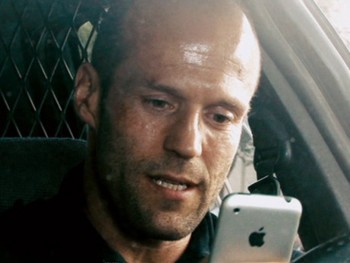
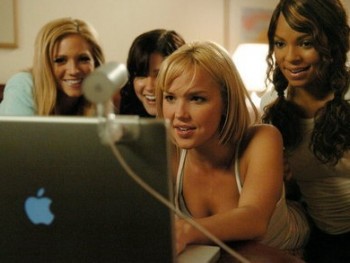
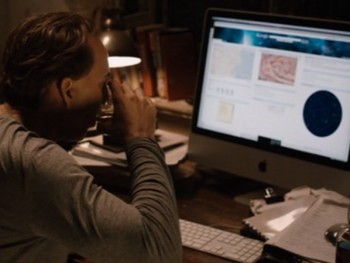
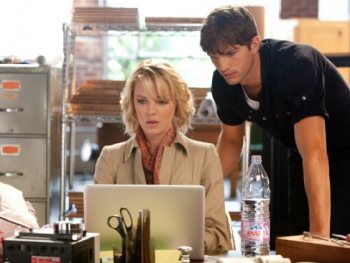
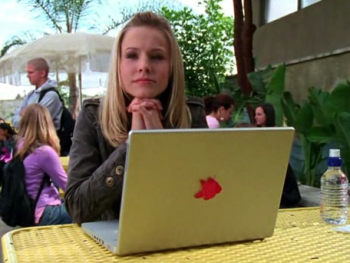
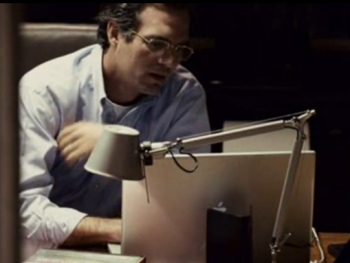
Avatar is in contention for an Oscar because it dominated its field, both technologically and financially. But another cinematic player was even more dominant last year: Apple. In the 44 films in 2009 that topped the box office for at least one weekend, an Apple logo or device could be seen in at least 18 of them. (That’s almost 41%.) In some, Apple products even eclipsed their human scene partners. This high appearance rate does not include the heap of mass-market films from 2009 that did not own a weekend but also featured Apple product placement.
Just to name a few of those? That list includes Drag Me to Hell, Orphan, I Love You, Man, Duplicity, Crank 2: High Voltage, Ghosts of Girlfriends Past, Imagine That, Sorority Row, Answer Man, Post Grad, I Love You Beth Cooper, All About Steve, Hurt Locker, New York, I Love You, It’s Complicated, Road Trip: Beer Pong, Law Abiding Citizen, Fantastic Mr. Fox, Funny People and Couples Retreat.
These numbers also don’t include the mountain of other films and TV shows, from Macs on Regis and Kelly and Jimmy Fallon’s desks to the Mac grotesquerie of The Office and 30 Rock. Fruity logo out front, advertisement aglow.
For one month in 2009, product placement tracking service Nielsen IAG noted 62 total “occurrences” of Apple products, more than any other brand, including AT&T (59), Coca-Cola (55) or Ford (41). Playboy, even with a whole show crafted around its brand name, logged a comparatively paltry 21 occurrences.

This is a downturn from 2008, when Apple appeared in exactly half of the 40 #1 films. This achievement comes at the end of a decade-long climb for Apple.
Last year, Apple’s product placement plan finally topped the heap as well-with Apple appearing in more #1 films than any other brand, including Ford and Pepsi, which had held the most appearances for every year going back to 2001 (except 2003, when the #1 was Cadillac).
Brandchannel.com’s weekly product placement tracking feature Brandcameo shows that Apple has appeared in 102 of the 302 weekly number one U.S. box office films from 2001 to 2009-more than 33% of them. Apple’s number is actually higher when period and fantasy/scifi films, in which Apple could not appear, are removed (the Lord of the Rings trilogy, Star Wars
prequels 3:10 to Yuma, etc.).
Measured against Apple’s real market share, there is a deeply inauthentic nature to many of Apple’s appearances, particularly films set in administrative hells where the brand is rarely found, whether hospitals (Scrubs) or government offices (24, Law Abiding Citizen). Apple’s “accomplishment” is made all the more extraordinary considering how automobile brands, like Ford, so easily and inconsequentially appear in a film (taxis in films are almost always Fords). Meanwhile, Apple products have to be very deliberately placed by a set designer.
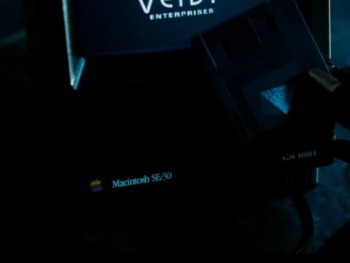
Hamish Purdy, the assistant set decorator for Watchmen (which featured an Apple “Easter egg”) explains, to some degree, how this happens. “One thing we often have to deal with is ‘clearance’ to use a product on a set. If the item has been ‘product placed,’ clearance is inherent. Apple has always been willing to provide product for sets without too much hassle.”
Yeah, just so that is clear: Apple does not pay for any of this exposure.
As for how Apple products in scenes don’t always lend realism, Purdy said, “With shows like CSI, the number one place people ‘learn’ about FBI work and police stations, the truth of it is horribly and inaccurately dramatized. Because the public feels this is what a police station looks like, other shows have to at least take a page from that design so that it registers with the public. We have created our own monster. A real police station would just look too boring and even ‘fake.’”

Apple products have become so expected onscreen that things have gotten bizarre. The 2007 hit film Wild Hogs featured a character getting an Apple logo tattoo despite an earlier scene with him not even using an Apple computer. The television show Worst Week attempted to pass off an iPod Touch as an iPhone and when the show Knight Rider went out of its way to use a no-brand prop phone (clearly a Sony Xperia) the show was criticized: “Knight Rider Clones the iPhone, Poorly.” That is to say, a show that did not use an Apple product was disparaged for not just using an Apple product.
Even the latest Star Trek, which features no Apple products, had some calling the starship design a “super duper Apple store,” an “internal Apple store of tomorrow,” “looks like the SS Apple Store,” “an Apple Store 10 years in the future,” and “Would you like a tour of the iBridge?” [all sic.] (Interestingly enough, in 1999, Star Trek director J.J. Abrams told Entertainment Weekly of his then-hit show Felicity’s many Mac placements, “For me, this is strictly a cultural phenomenon. There’s something human and friendly and optimistic about Macintosh.”
Apple’s rich history of product placement reaches back to the Mac’s original era of market dominance, appearing in many 1980s films like Short Circuit and Real Genius. The 1990s saw Apple make a active effort to highlight its film roles, openly advertising its Mission Impossible and Independence Day tie-ins. Apple was also hyper-aggressive, with product placing legend Suzanne Forlenza pushing Mac infiltration into television shows such as Veronica’s Closet, Seinfeld, Ally McBeal, Buffy the Vampire Slayer, Dharma & Greg, Felicity, The Drew Carey Show, X-Files, Real World and Just Shoot Me and films You’ve Got Mail
(obviously) and Jurassic Park.
So it’s notable that Apple now makes the same active effort to not draw attention to its outlandish level of product placement. The brand recently even disabled its official “Starring Apple” webpage that highlighted the Apple’s many cinematic achievements. In character, Apple declined to comment for this piece or about the fate of that page.
Apple is essentially like Hollywood itself, beautiful, expensive and not at all representative of reality. And just like disbelief is suspended when Angelina Jolie or Brad Pitt portray normal people, Apple product placement is dismissed as creative license.
So the greater question is, how does all this product placement benefit Apple? Does it at all? Apple computer sales have spiked in recent years. The reasons for this range from “people are learning the truth” to a halo effect created by the iPod and the iPhone. Comparing Apple’s product placement numbers since 2001 with its sales and market share, there appears to be an overall increase, though certainly nothing concrete. If anything, initial data show the increase in Apple onscreen placements (the vast majority of which are computers) to be linked to the explosion of the iPod, which also happened to be the explosion of Apple’s Q Rating.
Tim Aikin, founder and CEO of Boxwish, a site that creates a community of product placement spotters who solve the great quandary of how products can take advantage of their placements, says that as the Apple brand, having always polarized consumers, “has grown its market share from niche player to mass producer, thanks to the iPod, Intel-based Macs, iTunes and now the iPhone, they need to soften this polarization without losing their core audience and still maintaining a certain sense of exclusivity.”
Aikin said that Apple’s product placement is a success because it counteracts the boring sameness inherent in becoming a mass-market leader. “Apple is able to keep the brand ‘cool’ by having the stars of the movie use the products most overtly and then also throw in the ‘Easter eggs’ to maintain a connection with the core audience that gave Apple so much success in its early years.”
As you can tell, product placement is notorious for having no solid criteria to benchmark success. Like the Brandchannel and Nielsen IAG numbers, most product placement data cite “occurrences” and few results outside the pathetically overly-cited, such as E.T. and Reese’s Pieces.
A 2009 study of household computer ownership found that “approximately 12 percent of all U.S. computer owning households own an Apple computer, up from 9 percent in 2008.” While 12 percent representation in the real-world is nowhere near its 50 percent onscreen rate, it still possible that, in conjunction with iPhone and iPod halo effects, all of the free Apple product placement benefits the brand. It’s essentially the Head On “apply directly to the forehead” approach of repetition; see Apple after Apple after Apple after Apple after Apple after Apple after Apple in everything everywhere onscreen and a person becomes much more open to considering one of those Macs he’s hearing so much about.
Then there are the brain scans.
For his latest book, Buyology: Truth and Lies About Why We Buy, Martin Lindstrom conducted scanning to investigate unconscious brain activity in response to marketing, including product placement. When it comes to Apple and product placement, Lindstrom says Apple is maybe the most sophisticated player in the market: “What we know today is that a cognitive link between the storyline and the actual brand often scares the consumers away; it simply is too much ‘in your face.’ Non-conscious links therefore will be the future. The best example of such synergy is what we witness in Wall-E where the Apple logo never is present.” Lindstrom says that even though the Apple “brand” is rare in Wall-E, audiences make an unconscious value transfer from the movie to the brand. “Such value transfer is, according to the Buyology study, most prominent when the viewer isn’t aware of the product placement at the rational level in the brain and only at a non-conscious level.”
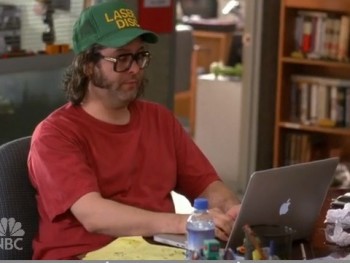
More odd is that Apple’s increasingly conspicuous product placement dominance draws few complaints when compared to the lesser efforts of brands like Pepsi, General Motors, or Starbucks. The full spectrum of product placement oppositionists, from those who reject the practice because it “compromises art” to those who see it as manipulative marketing, seem to be far more upset about the occasional McDonald’s placement than a brand that has appeared in more than one third of all box-office hits since 2001. A great illustration of this phenomenon is the show 30 Rock, which has been taken to task for its product placements, especially its McDonald’s McFlurry episode, even while the same show’s pornographic Mac and iPhone appearances passes with little comment.
About Apple’s Teflon status, Aikin says that Apple’s placements are often used in context, such as fulfilling an action in a movie, and aren’t “just an overt Pepsi truck going through a scene.” He also says: “The products look good. The increasing popularity of our site serves to show that many movies act almost like a how-to guide to being contemporary and relevant. Our audience wants to be inspired by movies and Apple, arguably an inspirational brand, fits this well.”
Leander Kahney, author of Inside Steve’s Brain, The Cult of Mac and The Cult of iPod and author of the blog Cult of Mac, says of Apple product placement: “Apple revels in this kind of thing. Apple has always been overrepresented in movies and TV shows. Its profile far exceeds its market share. But there’s never been a backlash and there never will. People are more likely to aspire than revolt.”
Buyology
study might nail the reason why Kahney is right. Lindstrom points to how preconceived notions about the Apple brand lend it a cloak of immunity against criticism. “You’re left second guessing if Apple had paid for the placement or not. Apple is not perceived as one of the bad guys-brands such as BP, McDonald’s and Microsoft often are, either because they’re seen as being the companies destroying the environment, being unhealthy or greedy.” And sure enough Buyology showed that part of what makes Apple’s product placements immune from criticism is that it isn’t seen as a product at all. “Apple has steered clear of this reputation because the brand is more a religion than anything else,” said Lindstrom. “[The study] showed a clear correlation between the brand Apple and the faith of Christianity. And due to such status, people rarely will question the presence of the brand, just as they wouldn’t question why various religions are featured in movies.”
But how long will audiences, and especially prop managers, continue to think different about Apple and its product placement? As Apple becomes more mass market it may find its culture role increasingly difficult, which in turn may endanger all of its free onscreen exposure.
There is evidence this is already happening. In small increments, Apple product placement that might have been is being stifled by producers camouflaging the glowing fruit with any number of tricky set props. A pencil jar here; a yellow stickie note there.
Apple’s product placement pace will remain strong in 2010, with Apple placements already confirmed in the films Book of Eli, When in Rome, Kick Ass, Chloe, The Killers, Wall Street 2, City Island, She’s Out of My League, The Joneses, The Spy Next Door, Percy Jackson: Lightning Thief, Valentine’s Day, The Bounty Hunter and Toy Story 3. But the fat years of being a film darling may be on the decline. Even Madonna eventually got married and had kids.
Coming soon: The top ten most important Apple product placements of all time.
Abe Sauer can’t stop seeing Apple logos everywhere now.